
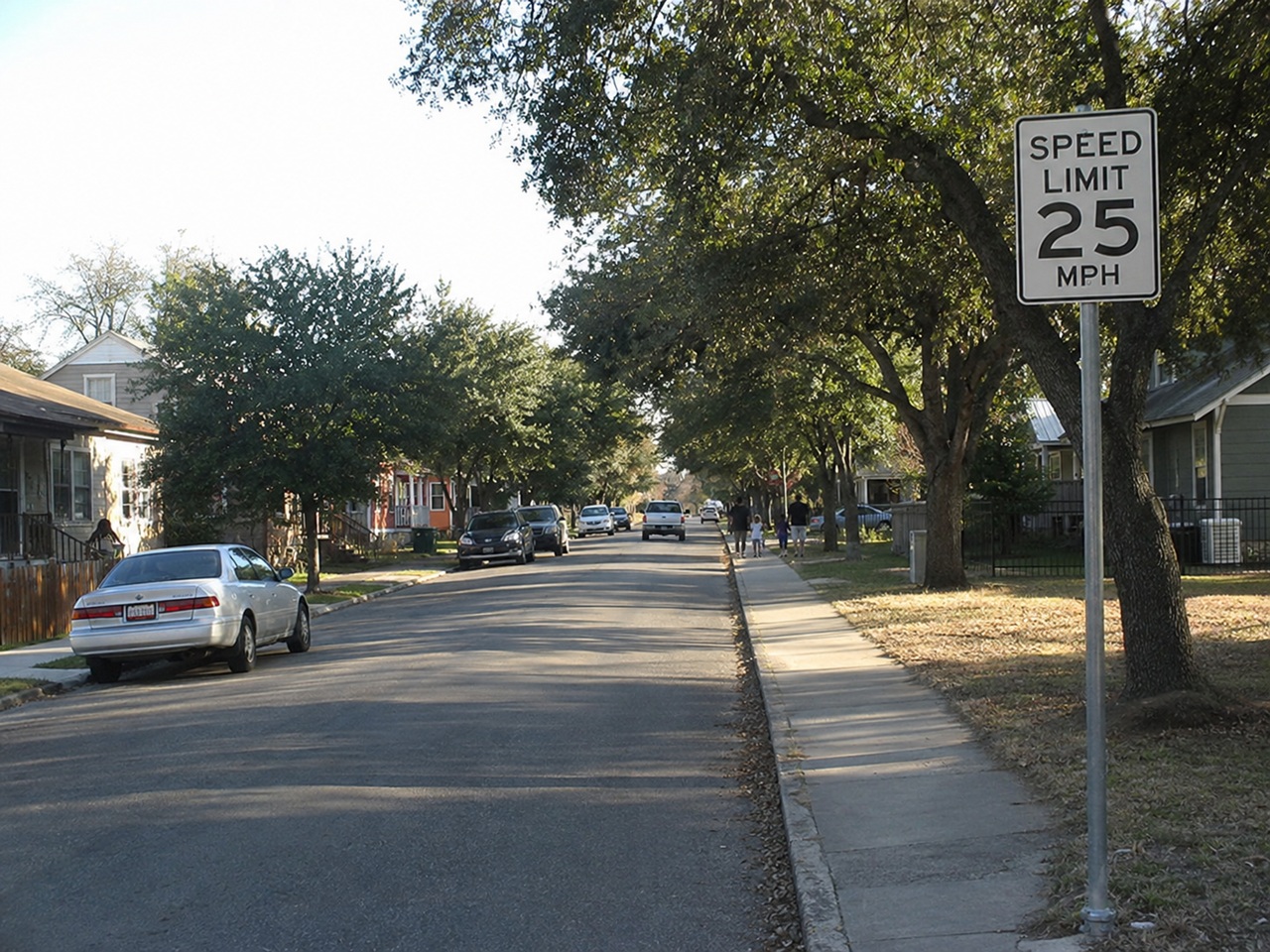
Lower Speed Limits Could Change How San Antonio Crash Claims Are Investigated
San Antonio residents are pushing for safer neighborhood streets, and one proposal is getting serious attention: lowering the default residential speed limit from 30 mph to 25 mph. The conversation comes as concerns over speeding, pedestrian safety, and serious car accidents continue to grow throughout the city.
According to the San Antonio Report, city leaders are exploring whether reducing the default speed limit could help prevent serious injuries and deaths on neighborhood streets. But officials also recognize that lowering the number on a sign probably won’t be enough by itself. Safer roads usually require better design, targeted enforcement, and drivers who actually slow down.
At The Herrera Law Firm, our San Antonio car accident lawyers know how devastating speeding-related crashes can be. A lower posted limit may help prevent some collisions, but when a reckless driver still causes serious harm, victims need evidence, legal guidance, and a firm that knows how to fight back.
Why Is San Antonio Considering A Lower Speed Limit?
Neighborhood streets are not just for vehicles. They are shared by families, children, pedestrians, bicyclists, dog walkers, delivery drivers, and residents entering and leaving their homes every day. When drivers treat those streets like shortcuts or speedways, everyone nearby is put at risk.
City officials have pointed to one simple reality: higher speeds make crashes more dangerous. According to information presented to San Antonio’s Transportation and Infrastructure Committee and reported by the San Antonio Report, a pedestrian struck by a vehicle traveling 30 mph has roughly a 45 percent chance of being killed. At 20 mph, that risk drops to about 5 percent.
Reducing vehicle speeds gives drivers more time to react. It also reduces impact force when a crash does happen. That matters in neighborhoods, school zones, crosswalks, and residential streets where people outside vehicles have little protection.
Why Might Signs Alone Not Be Enough?
San Antonio’s early pilot program showed why changing a posted speed limit doesn’t always change driver behavior. City staff reduced the speed limit to 25 mph on part of Kampmann Boulevard near Babcock Road, then compared speed data before and after the change. The results showed only small differences, and in one direction, speeds actually increased.
That does not mean lower limits are pointless. It means signs work best when they are paired with road design that makes speeding harder. A wide, straight neighborhood street can invite drivers to go faster than the posted limit, especially when there are few visual cues telling them to slow down.
That is why city officials discussed a broader approach that could include:
- Increased Traffic Enforcement: Drivers are more likely to slow down when they know speeding is being watched and enforced.
- Roadway Redesigns: Narrower lanes, curb extensions, raised crossings, and other design changes can make streets feel less like high-speed roads.
- Traffic-Calming Measures: Speed cushions, roundabouts, medians, and chicanes can physically slow traffic where speeding is a repeated problem.
- Public Education: Drivers need to understand that a few extra miles per hour can decide whether a pedestrian survives a crash.
- Intersection Improvements: Safer crossings, clearer sight lines, and better signals can reduce conflicts between drivers and vulnerable road users.
Officials are right to focus on more than signs. A safer speed limit helps, but drivers still have to make safer choices.
How Does Texas Law Treat Speed Limits?
Under the Texas Transportation Code, 30 mph is generally treated as a reasonable speed in an urban district unless a different limit is posted. Cities can lower speed limits, but they must follow the legal process required under state law.
That legal backdrop matters because a posted speed limit is not just a suggestion. It can become evidence after a crash. If a driver was going too fast for the posted limit, the road conditions, traffic, weather, or the presence of pedestrians, that conduct can help show negligence.
A speeding ticket can help support a claim, but it is not the only way to prove fault. A civil case can use witness statements, video, vehicle data, crash reconstruction, and physical evidence to show that speed caused or contributed to the collision.
Who Is Most At Risk When Drivers Speed In Neighborhoods?
Higher speeds do not put every road user at equal risk. People outside vehicles are the most vulnerable because they do not have seat belts, airbags, or a vehicle frame to protect them.
- Pedestrians: A person crossing the street, walking near a school, or stepping out near a parked car can suffer catastrophic injuries when a driver is going too fast to stop.
- Bicyclists: A cyclist has little protection when a speeding driver passes too closely, fails to yield, or misjudges distance at an intersection.
- Motorcyclists: Riders face severe injury risks when drivers speed, follow too closely, turn left across their path, or fail to see them in time.
- Children Near Schools: Children can be unpredictable, and drivers need more time to react near school zones, parks, buses, and residential streets.
Anyone hurt by a speeding driver in one of these situations may have a personal injury claim, even if the crash did not happen on a highway or major road.
Why Does Speed Make Injuries Worse?
Speed affects more than how fast a driver reaches a destination. It changes how much time a driver has to react, how far the vehicle travels before stopping, and how much force is transferred into another person’s body during impact.
As vehicle speed increases:
- Drivers Have Less Time To React: A driver who is speeding may not have enough time to notice a child, pedestrian, cyclist, stopped vehicle, or turning car.
- Stopping Distance Gets Longer: Even if the driver brakes, the vehicle keeps traveling while the driver reacts and the brakes take effect.
- Crash Forces Increase: A higher-speed impact can cause more serious trauma, even when the speed difference seems small.
- Fatal Injuries Become More Likely: Pedestrians, bicyclists, motorcyclists, and children are especially exposed to severe outcomes.
Many serious car accident injuries happen because the driver had no time left to avoid impact. That is why speed can be central to both the crash investigation and the injury claim.
What Evidence Can Prove A Driver Was Speeding?
Without a speed camera, victims may worry that proving speed will be impossible. It usually is not. A strong investigation can still uncover evidence showing how fast a driver was going and whether that speed contributed to the crash.
Useful evidence may include:
- Crash Reports: The responding officer’s report may include witness statements, citations, roadway observations, and diagrams.
- Vehicle Data: Many newer vehicles store speed, braking, throttle, and steering information from the moments before impact.
- Witness Statements: People nearby may be able to describe how fast the vehicle was traveling or whether the driver braked.
- Video Footage: Homes, businesses, dashcams, doorbell cameras, and traffic cameras may capture the vehicle before or after the collision.
- Physical Evidence: Skid marks, debris patterns, crush damage, and final resting positions can help reconstruction experts estimate speed.
- Medical Records: The nature and severity of the injuries can help show the force involved in the crash.
The sooner this evidence is gathered, the harder it becomes for an insurance company to rewrite what happened.
What Should You Do After A Speeding Crash In San Antonio?
The moments after a crash can be confusing, especially when someone is seriously hurt. Still, the steps you take early can affect your health and your claim.
- Call 911: Report the crash, request medical help, and make sure police document the collision.
- Get Medical Care: Do not assume pain, dizziness, headaches, or soreness will go away. Some injuries get worse after the adrenaline fades.
- Take Photos And Videos: Capture vehicle damage, road conditions, skid marks, traffic signs, intersection layouts, and visible injuries.
- Get Witness Information: Names, phone numbers, and brief statements can help preserve what people saw before memories fade.
- Be Careful What You Say: Do not guess about speed, fault, or injuries. Stick to what you know, and do not give the insurance company a recorded statement before getting legal advice.
A speeding crash can become a fight over evidence. The earlier our firm gets involved, the faster we can help protect the proof that shows what really happened.
How Do Insurance Companies Fight Speeding Claims?
Insurance companies often try to reduce what they owe by shifting blame or minimizing the role speed played in the crash. They may argue the driver was not going that fast, that the victim stepped into traffic, that another driver caused the collision, or that the injuries are not as serious as the medical records show.
They may also push for a quick settlement before the full cost of the injuries is known. That is risky because serious crash injuries can require surgery, therapy, follow-up care, time away from work, and long-term support.
Knowing how insurance companies handle car accident claims can help victims avoid mistakes that make the case harder. You should not have to deal with an adjuster’s pressure tactics while you are trying to heal.
What Compensation May Be Available After A Serious Crash?
Compensation depends on the injuries, available insurance coverage, evidence of fault, and how the crash affects the victim’s life. In speeding-related cases, victims may be able to recover money for medical bills, lost wages, future medical care, pain and suffering, reduced earning capacity, and other losses.
If the crash caused a death, surviving family members may also have a wrongful death claim. No amount of money can replace the person who was lost, but a claim can help hold the reckless driver accountable and provide financial support for the family left behind.
Understanding who pays for car accident compensation in Texas is not always simple. A claim may involve the at-fault driver’s insurance, your own coverage, uninsured or underinsured motorist coverage, medical bills, and future losses.
How Can A San Antonio Car Accident Lawyer Help?
Being hurt by a speeding driver, or losing someone you love to one, can leave you dealing with pain, grief, medical bills, lost income, and an insurance company that may be working against you from the start.
At The Herrera Law Firm, we understand how overwhelming life can become after a serious car accident. We investigate the crash, gather evidence, deal with the insurance company, work with experts when needed, and fight for the compensation our clients deserve. Our case results show what can happen when injured Texans have a team that is ready to fight.
We proudly serve the San Antonio community by standing up for injured Texans. We never cut corners, and we never stop fighting for our clients. Winning isn’t luck. It’s knowing how to fight.
If you or someone you love has been injured in a car accident caused by a negligent driver, contact The Herrera Law Firm today for a free case evaluation. We work on a contingency fee basis, so you do not pay unless we win. Expect more. Contact us.
