
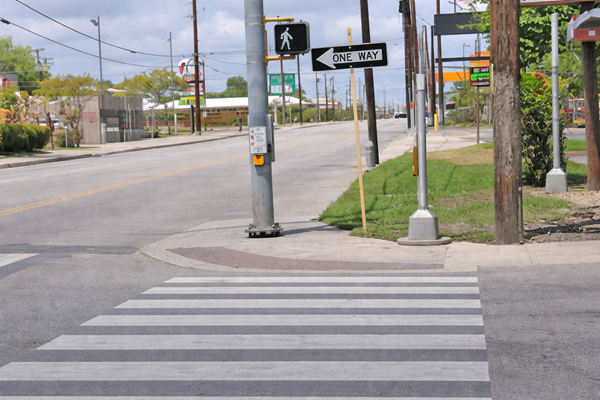
When most people talk about street safety, they’re not referring only to traffic rules or police enforcement. They’re talking about what it feels like to walk, drive, or bike through their own neighborhood, and what makes those streets secure or stressful.
Car wrecks, pedestrian crashes, and bicycle crashes are common concerns in San Antonio, and recent research has addressed these concerns. That sentiment came through clearly in an October 2025 FlashVote survey conducted by the San Antonio Transportation Department. More than 200 residents across San Antonio shared how safe they feel on local streets, revealing something city planners have long suspected: the experience of street safety is personal, local, and shaped by design details that change block by block.
One respondent summed it up perfectly: "Downtown, the River Walk, and busy areas feel safer. My neighborhood streets do not." That statement captures a powerful truth that traffic safety isn’t just a matter of numbers and crash reports. It’s an emotional and environmental experience that varies widely across communities.
How does street design contribute to traffic safety?
Residents in the survey didn’t only think about speed limits or how many cars pass by. They associated safety with infrastructure and surroundings such as lighting, sidewalks, crossing distance, and nearby activity. A well-lit, well-traveled street feels safer than a dark, isolated stretch, even if both see the same amount of traffic.
This perception matters because, from both a public safety and legal standpoint, street design influences risk. Poorly maintained roads, insufficient lighting, or missing crosswalks can increase the risk of accidents and injuries. In many cases, those environmental factors are considered when determining responsibility after a crash.
What role do neighborhoods play in street safety?
A major takeaway from the survey was the dramatic difference in residents' perceptions of safety across neighborhoods. Neighborhoods shape street safety in practical, everyday ways. Local patterns of traffic volume, land use, and street design influence how people move and perceive risk, so tailored solutions make the most impact. In essence, aligning improvements with a neighborhood’s unique hazards and daily rhythms yields safer streets for everyone.
In some areas, nearly half of the respondents said they feel unsafe from cars or crime while walking. That finding highlights why one-size-fits-all street improvements rarely work.
What succeeds downtown might not suit a quieter residential block. A neighborhood with wide lanes and fast-moving traffic might need speed humps, traffic circles, or curb extensions. A place with cracked or missing sidewalks might need better pedestrian infrastructure before anything else.
Interestingly, the city’s data on crashes and injury severity tend to mirror these public perceptions. The neighborhoods where residents report feeling unsafe often have more recorded collisions and pedestrian injuries.
What are the top traffic safety concerns among San Antonio residents?
San Antonio residents showed strong awareness of the risks that make local streets unsafe, especially behaviors that threaten pedestrians and drivers. This focus on human behavior and equitable access suggests people want a citywide culture of responsibility, not just new road features. The survey revealed several key concerns shaping how people think about traffic safety across the city. For example:
- Distracted driving consistently ranked higher than driving under the influence as the top safety concern. Residents reported seeing texting, checking screens, or using navigation apps instead of focusing on the road daily.
- Pedestrian safety ranked above traffic flow among nearly half of respondents, who called for safer crosswalks, slower speed zones, and better separation between vehicles and pedestrians.
- Public transportation improvements also gained notable support, with residents favoring dedicated bus lanes over building new bike lanes.
How is San Antonio responding to traffic safety concerns?
The San Antonio Transportation Department is using these findings to guide Vision Zero SA. This initiative seeks to eliminate traffic deaths through smarter design and targeted improvements. One of the strongest lessons from the survey is that safety efforts must start with local streets, not just the busiest arterials.
By focusing on trouble spots identified through crash data and resident feedback, the city plans to continue investing in:
- Traffic calming measures, such as speed humps and raised crosswalks.
- Improved lighting to discourage crime and increase nighttime visibility.
- Sidewalk expansion projects to make walking safer and more accessible.
- Protected crossings and signage, especially near schools or community centers.
While San Antonio’s commitment to Vision Zero and improved street design is an important step toward a safer future, these changes don't happen overnight. For many residents, the reality of poorly lit streets or distracted drivers has already resulted in life-altering accidents. When the city’s infrastructure or another driver’s negligence fails you, the consequences are deeply personal. You shouldn't have to wait for a city-wide policy change to get the justice and support you need today.
Need a San Antonio personal injury lawyer? We’re ready to help.
If you’ve been hurt in a car, truck, pedestrian, or bicycle accident in San Antonio, you have the right to hold the negligent party accountable and seek full compensation. However, the process isn't always easy. Evidence can disappear quickly, and insurance companies often try to shift the blame or downplay your injuries to reduce your compensation.
That's why you need The Herrera Law Firm in your corner. Our seasoned team fights to recover every dollar you deserve, handling investigations, evidence gathering, medical coordination, and aggressive negotiations with insurance companies so you can focus on healing. We serve clients across San Antonio and surrounding Bexar County communities, bringing local insight and steadfast advocacy to every case.
We believe your best path to resolution starts with a free consultation and a no-risk approach. You won’t pay upfront legal fees, and we work on a contingency fee basis, meaning we only get paid if we win. Contact us online or call today to schedule your complimentary case consultation. Bring any crash details you have, and we’ll outline your options, explain timelines, and map out a personalized plan to pursue full compensation.
