
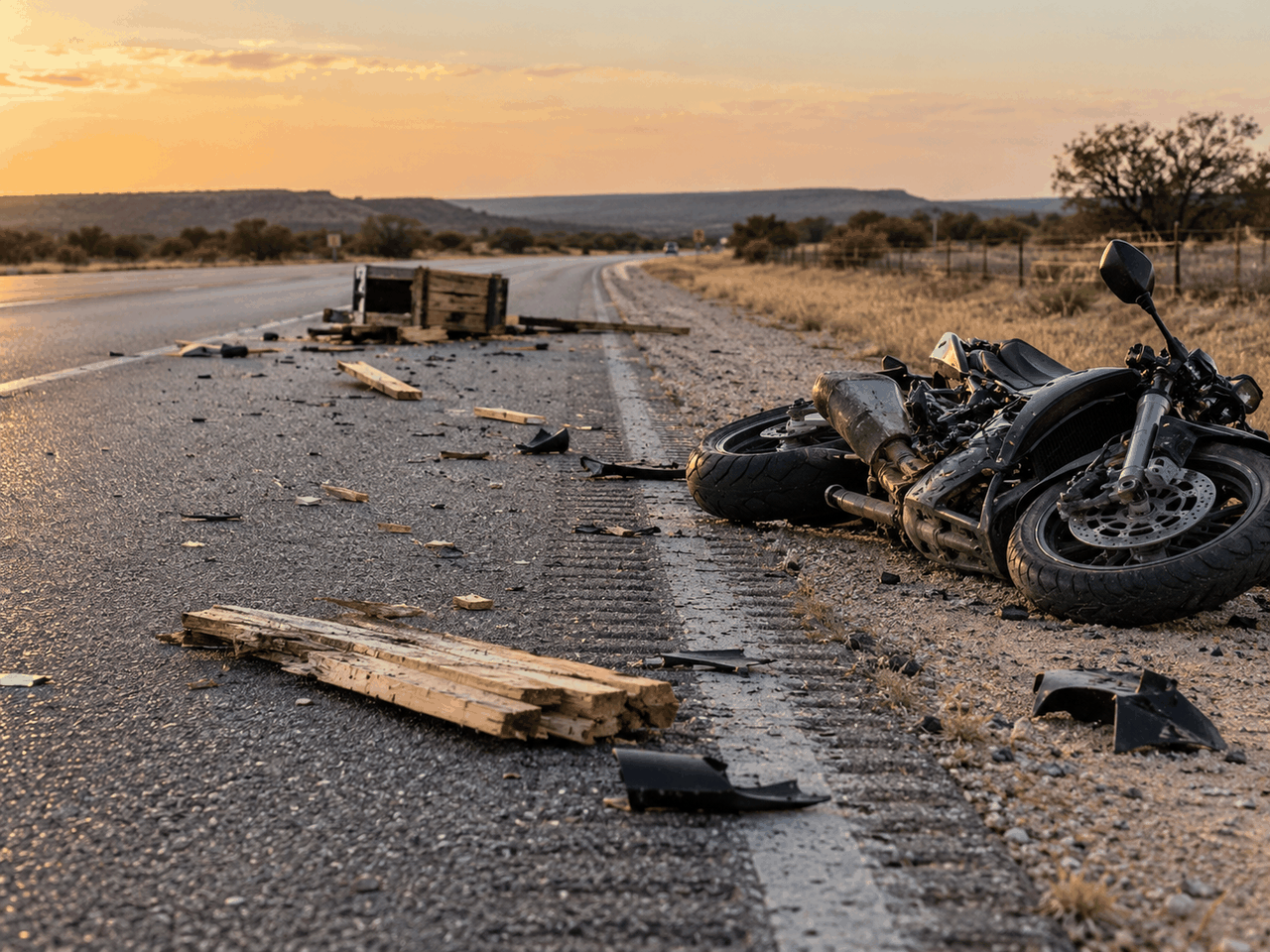
The Driver, Trucking Company, Contractor, or Government Agency Behind the Debris May Be Responsible for the Injured Rider's Losses
A motorcycle crash caused by road debris in Texas raises a hard question. Who pays for the rider's injuries? The law calls that person or company liable, and the answer isn't always clear. Debris can come from a truck that lost its load, a work crew that left materials behind, or a driver who never noticed something fell.
Road debris is a bigger problem than many people realize. A study by the AAA Foundation for Traffic Safety found debris played a role in about 53,000 crashes a year nationwide from 2018 to 2023. Those crashes led to about 5,500 injuries and 72 deaths each year. Nearly half of those deaths happened after a driver swerved to avoid something in the road.
For a rider, that swerve can be the whole crash. Our San Antonio motorcycle accident lawyers at The Herrera Law Firm help injured riders answer the most important question in a debris case. Where did the object come from? Finding that answer quickly can decide whether an injured rider gets paid at all.
|
What Texas Riders Should Know About Debris Crashes
|
Who Is Responsible When Road Debris Causes a Motorcycle Crash?
In most cases, the person or company that put the debris on the road is responsible. Texas expects drivers to keep their cargo and their vehicles from becoming a danger to others. When they don't, they can be held responsible for the injuries that follow. That can be true even if they never saw the rider go down.
Sometimes more than one party shares the blame. A trucking company may be responsible for a worn tire that came apart on the highway. A builder may be responsible for gravel left in a lane near a work zone. The table below shows how common types of debris can point to different responsible parties.
| Type of Debris | Where It Often Comes From | Who May Be Responsible |
|---|---|---|
| Gravel, sand, or dirt | Uncovered dump trucks and pickups | The driver and the company that owns the truck |
| Ladders, furniture, or tools | Pickup beds and trailers | The driver who loaded the vehicle |
| Tire tread or truck parts | Poorly maintained trucks | The trucking company or the driver |
| Construction materials | Road and building work zones | The contractor or construction company |
| Debris left in a lane for days | Roads no one cleared | Sometimes a city, county, or state agency |
A quick investigation matters in all of these situations. Road crews often sweep debris away within hours of a crash. Once it's gone, proving where it came from gets much harder. Photos, video, and witness names gathered early can keep the answer from disappearing along with the debris.
What Does Texas Law Require Drivers Hauling Loads to Do?
Texas has clear rules for vehicles that carry loose material like dirt, sand, gravel, and wood chips. Texas Transportation Code Sections 725.021 and 725.022 spell out what drivers must do.
- Cover the Load – In most cases, the load must be covered, and the cover must be firmly tied down at the front and back.
- No Holes or Cracks – The truck bed can't have holes, cracks, or other openings that let material leak out onto the road.
- Keep the Tailgate Closed – The tailgate must be securely closed so nothing slides out while the vehicle is moving.
- Clean Off Spills – Material that spills onto other parts of the truck must be removed before the truck goes back on a public road.
A driver who breaks these rules can face a fine of up to $500 under Section 725.003. That fine does nothing for an injured rider. But proof that a driver ignored these rules can be strong evidence in an injury claim, because it helps show the crash never had to happen. Debris from an unsecured commercial vehicle can also open the door to the company's insurance.
If the Driver Who Dropped the Debris Drove Away
Many debris crashes leave no one at the scene to blame. The truck that lost its load may never have stopped. In that case, the rider's own insurance may be the main source of payment. The part of a policy that pays when the at-fault driver has no insurance or can't be found is called uninsured motorist coverage.
Texas puts a big limit on that coverage. Under Texas Insurance Code Section 1952.104, coverage for an unknown driver requires actual physical contact. Some Texas courts have read this rule strictly. Debris that fell from an unknown truck may not count as contact with the truck itself.
That can leave a rider who swerved and never touched anything in a tough spot. Every detail about what struck the bike and where it came from can matter. Finding the truck or its owner can also open the door to their insurance. That's one more reason to start looking for answers right away.
Can a Rider Hold the City or State Responsible?
Sometimes the debris didn't fall from a vehicle that day. It may have sat in the road for days while no one cleared it. A city, a county, or the Texas Department of Transportation (TxDOT) may be responsible for keeping that road safe. But claims against government agencies follow special rules.
The biggest rule is a short deadline. Texas Civil Practice and Remedies Code Section 101.101 generally requires the agency to get written notice of the claim within six months of the crash. Cities can set shorter deadlines, and the City of San Antonio requires written notice within 90 days. A rider who waits too long can lose the right to recover from the agency.
These claims can also be harder to prove. A rider may need to show the agency knew about the debris and didn't act in time, though Texas law treats some roadway obstructions as special defects that can shift that burden. Records like road maintenance logs and 311 complaints can help answer these questions. Those records exist, but someone has to ask for them quickly.
Evidence That Shows Where Road Debris Came From
Proving where debris came from is often the hardest part of these cases. The right evidence can turn a mystery into a claim someone has to pay.
- Video From Cameras – Helmet cameras, dash cameras in nearby cars, and business security cameras may show the object falling or the vehicle that lost it.
- The Police Crash Report – The officer's official accident report may note the debris, describe the scene, and list witnesses who saw what happened.
- The Debris Itself – Company names, markings, or serial numbers on a tire, ladder, or load can sometimes lead back to the owner.
- Witness Statements – Other drivers may have seen a truck dropping its load or know how long the debris sat in the lane.
Much of this evidence has a short life. Some cameras overwrite old video within days, so it's important for a lawyer to request footage right away. Road crews may haul debris away before anyone can photograph it. That proof can decide who pays for a rider's medical bills and lost income.
Tracking Down the Source Before the Trail Goes Cold
Road debris crashes in Texas can be some of the toughest motorcycle cases to win. You may not know who dropped the object. Your own insurance company may say the crash doesn't qualify for coverage. Meanwhile, the evidence that could prove your case may be disappearing by the day.
Our attorneys have fought for injured Texans since 1983. We know how to track down video footage, find the vehicle or company behind the debris, and push back when an insurer blames the rider. We work on a contingency fee, so you pay nothing unless we make a financial recovery for you.
You deserve answers and a legal team that won't let the trail go cold. If road debris caused your motorcycle crash, don't wait for the evidence to vanish. Contact our team for a free consultation. A San Antonio motorcycle accident lawyer at our firm can meet with you, answer your questions, and explain your options.
