
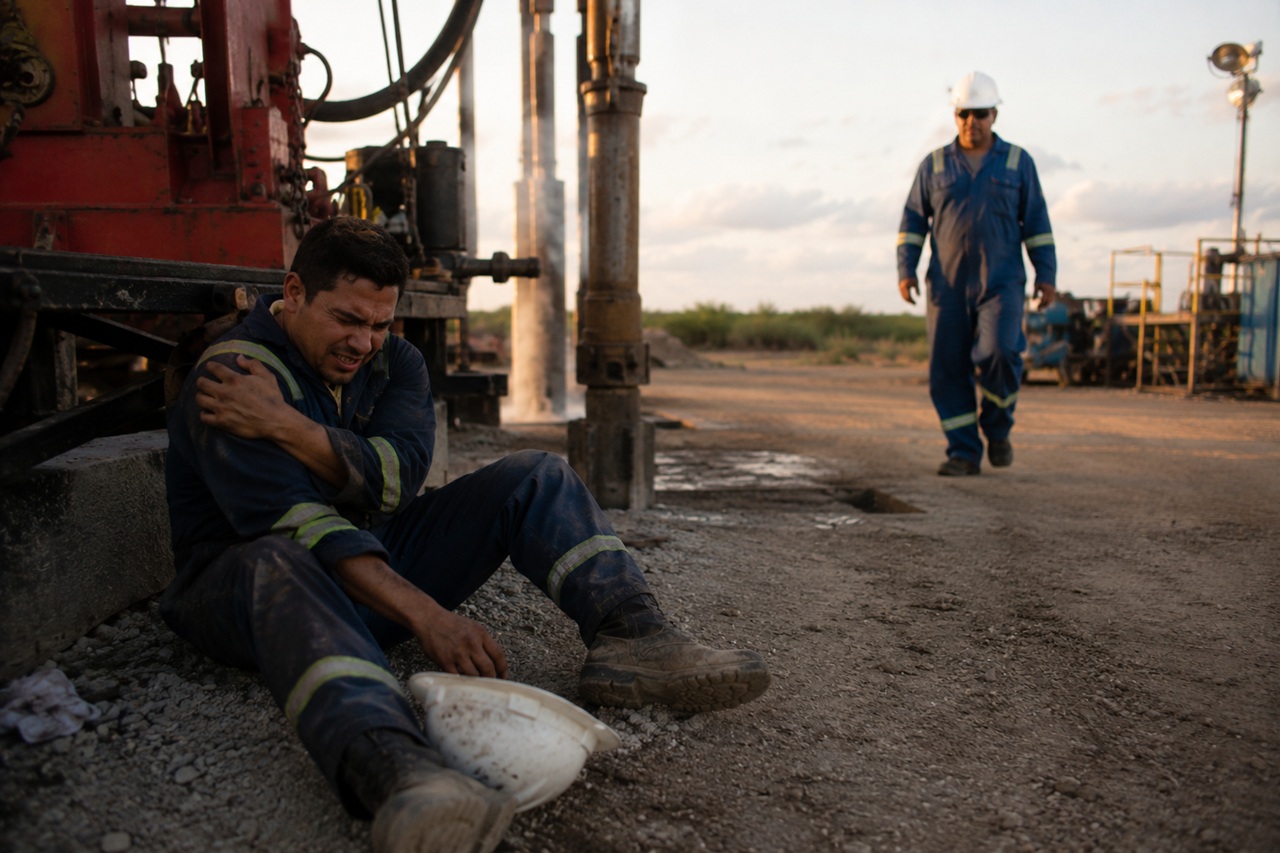
What San Antonio and South Texas Oil Field Workers Need to Know When Their Employer Opted Out of Workers' Comp
Texas is the only state in the country that allows private employers to opt out of the workers' compensation system entirely. Employers who make that choice are called non-subscribers, and the consequences for their injured workers cut both ways. On one hand, those workers lose access to the no-fault benefits that workers' comp provides. On the other hand, they gain something potentially far more valuable: the right to sue their employer directly in civil court, without the limitations that cap what workers' comp pays out, and without having to prove anything beyond ordinary negligence.
For oil field workers in South Texas and across the state, understanding whether their employer is a non-subscriber and what that means for a serious injury claim can be the difference between a modest administrative payout and a full civil recovery that actually accounts for what was lost. That's where the Herrera Law Firm comes in. Our San Antonio work injury lawyers have been fighting for injured Texas workers for decades, and non-subscriber claims against oil field employers are exactly the kind of case we were built to handle.
What It Means When an Employer Is a Non-Subscriber
In every other state, workers' compensation is mandatory. In Texas, it's optional, and a significant number of employers, including some of the largest operators in the oil and gas industry, choose not to carry it. Under Texas Labor Code Chapter 406, employers who opt out of workers' comp must notify employees and post notices at the workplace, but many workers never see those notices or don't understand their significance until after they've been hurt.
The practical implications of non-subscriber status are significant for both sides:
- For the Employer: A non-subscriber employer cannot use three of the most powerful defenses available under Texas common law — the fellow servant rule, the assumption of risk doctrine, and contributory negligence — to defeat an injured worker's claim. That's a substantial legal disadvantage in any civil lawsuit.
- For the Injured Worker: The worker can sue the employer directly in civil court and pursue the full range of damages available under Texas personal injury law, including past and future medical expenses, lost wages and earning capacity, pain and suffering, and in egregious cases, punitive damages. None of those categories is capped the way workers' comp benefits are.
The tradeoff is that a non-subscriber claim isn't automatic. The worker has to prove that the employer's negligence caused the injury, which requires investigation, evidence, and experienced legal representation. That's a higher bar than a workers' comp claim, but the potential recovery is dramatically higher as well.
It's also worth being clear about something upfront: our firm handles non-subscriber personal injury claims, not workers' compensation claims. If your employer carries workers' comp, we can help you understand your options and refer you to the right resource. But if your employer is a non-subscriber and you've been seriously hurt, a civil negligence claim may be exactly what your situation calls for, and that's precisely what we do.
Why Oil Field Non-Subscriber Claims Are Particularly Significant
The oil and gas industry is one of the most dangerous in the country, and Texas is its center of gravity. Oil rig accidents, blowouts, equipment failures, explosions, and falls from height produce injuries of a severity that workers in most other industries never encounter, and the financial stakes of those injuries are correspondingly high.
When an Eagle Ford Shale accident or a platform accident involves a non-subscriber employer, the injured worker's legal position is stronger than in any other workplace injury scenario in Texas. The employer cannot hide behind the workers' comp system's exclusive remedy provisions, cannot shift blame to the worker or their coworkers as easily, and faces a civil jury that will hear the full story of what the employer did or failed to do.
The types of oil field accidents that give rise to these claims, from pressure blowouts to crane failures to chemical exposures, frequently involve employer decisions about safety protocols, equipment maintenance, and staffing that look very different under a civil negligence standard than they do in an administrative proceeding.
The Evidence That Makes Non-Subscriber Claims Winnable
Because a non-subscriber claim requires proving negligence rather than simply documenting an injury and employment relationship, the quality of the investigation behind the claim matters enormously. The evidence that builds a strong non-subscriber oil field case includes:
- Safety Records and Incident Logs: A pattern of safety violations, near-misses, or prior incidents involving the same equipment or location establishes that the employer knew about a dangerous condition and failed to address it.
- Training and Certification Records: Oil field workers are required to receive specific safety training for the hazards they encounter. Gaps in training documentation, or evidence that required certifications were bypassed in the rush to keep operations running, go directly to the employer's negligence.
- Equipment Maintenance and Inspection Records: Faulty equipment is a leading cause of serious oil field injuries, and maintenance logs that show deferred repairs or missed inspection intervals establish that the employer put production ahead of worker safety.
- Witness Statements from Coworkers: The people who were on the platform or at the well site when the injury occurred often know exactly what the conditions were and how the incident unfolded. Getting those accounts preserved quickly, before the employer has time to manage the narrative, is critical.
- Employer Communications: Internal emails, safety meeting notes, and communications between supervisors and management can reveal whether dangerous conditions were known, reported, and ignored at the decision-making level.
What Third-Party Claims Add to the Picture
Even when an employer does carry workers' comp, a seriously injured oil field worker may have a separate civil claim against a third party whose negligence contributed to the accident. Equipment manufacturers, contractors, subcontractors, and other companies operating at the same well site may bear legal responsibility for an injury that workers' comp doesn't fully address.
In a non-subscriber situation, these third-party claims can run alongside the employer negligence claim, potentially involving multiple defendants and multiple insurance carriers. Identifying every responsible party, understanding how their coverage interacts, and building a unified case that pursues maximum recovery across all available sources is exactly the kind of complex litigation our firm handles regularly.
How We Approach Non-Subscriber Oil Field Cases
Our firm has built cases around some of the most serious oil field injuries in South Texas, including mine and refinery accidents, Midland-Odessa pipeline explosions, and construction-related injuries on active well sites. As attorney Frank Herrera Jr. has said for more than 35 years: "Winning isn't luck, it's knowing how to fight." In a non-subscriber oil field case, that means moving quickly to preserve evidence, identifying every party whose negligence contributed to the injury, and building a case that holds up in front of a jury.
We handle every case on a contingency fee basis, which means there are no upfront costs and no fees of any kind unless we recover compensation for you.
Seriously Hurt on a Texas Oil Field? Find Out Where Your Case Stands.
If you were seriously injured working on an oil field, platform, refinery, or pipeline in Texas and you're not sure whether your employer carries workers' comp or what your legal options are, the most important step you can take is getting the right information quickly.
Contact the Herrera Law Firm today for a free case evaluation. We'll tell you exactly what your situation looks like and what we can do to help.
