
Scaffold Parts, Inspection Logs, and Witness Names Can Disappear Within Days, and Saving Them Can Decide Who Pays
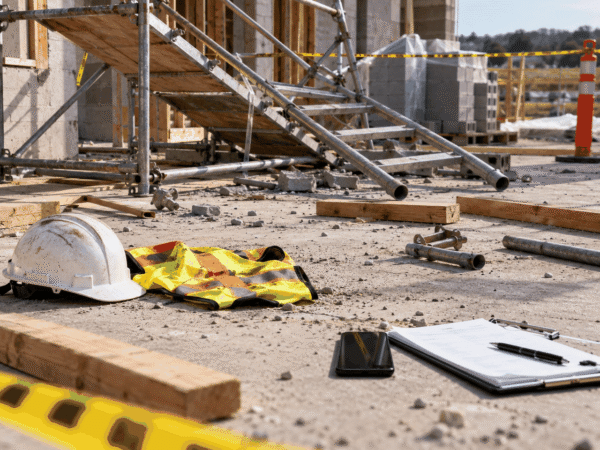
Preserving evidence after a construction site accident in Texas can make a real difference in an injured worker's ability to obtain compensation. Job sites change fast. Crews can clean up, fix broken equipment, or move on to the next phase of work, sometimes within hours. The proof of what went wrong can vanish before the injured worker even leaves the hospital.
Construction accidents are also common and often deadly. The U.S. Bureau of Labor Statistics (BLS) reports construction had 1,034 worker deaths in 2024, more than any other private industry. In many cases, the debris left behind after a construction accident can tell the story of what really happened.
That's why speed matters so much in these cases. At The Herrera Law Firm, our San Antonio construction accident lawyers help injured workers secure that proof before it's gone. Whether a claim targets a careless contractor, an equipment maker, or an employer that skipped workers' comp coverage, saving the right evidence early can shape the outcome.
|
Key Takeaways
|
Why Does Evidence Disappear So Fast After a Construction Accident?
A construction site is built to change. The scaffold that collapsed may come down the same week. A broken guardrail may be fixed before the next shift. Companies have a business reason to clean up and keep working. They also have a reason to protect themselves once a worker gets badly hurt on their watch.
Some evidence also disappears on a schedule. Security cameras often automatically overwrite old video. Supervisors can delete text messages. Workers who saw the accident may finish their contract and move to a job in another city. Each passing day can make the truth harder to prove.
A written request to save evidence can help. A lawyer can send a letter telling each company involved to keep video, records, and equipment exactly as they are. That letter puts the companies on notice that a claim is coming. Destroying evidence after that point can create real problems for them in court.
What Physical Evidence Should Be Saved?
Physical evidence shows exactly what failed and why. The most important items are often the ones a company wants to repair or throw away first.
- The Equipment or Tool – A broken ladder, power tool, or harness should be kept in the same condition, with no repairs or cleaning.
- Safety Gear – The hard hat, boots, gloves, and fall harness the worker wore can show the force of the accident or a defect.
- Scaffold and Guardrail Parts – Bent braces, missing pins, or loose planks can prove the setup was unsafe before anyone got hurt.
- Photos of the Scene – Pictures taken right away can capture spills, missing barriers, or poor lighting before anyone fixes the problem.
A broken tool or machine may also lead to a separate claim against the company that made it. Lawyers call this a product liability claim. It usually depends on testing the product itself. Once a broken part goes back to the maker or into a dumpster, that claim can disappear along with it.
Records a Construction Company Has to Keep
Construction companies create a paper trail every day, and federal safety rules require some of it. Under 29 CFR 1904.35, current and former workers can request a copy of their job site's injury log, which the Occupational Safety and Health Administration (OSHA) requires many employers to keep. The employer must hand it over by the end of the next business day.
| Record | What It Can Show |
|---|---|
| Injury logs (OSHA 300 log) | Past injuries at the same site or with the same company |
| Scaffold inspection checks | Whether a qualified person checked the scaffold before the shift |
| Daily job reports | Who was working, what tasks were underway, and the weather |
| Safety meeting sign-in sheets | Whether workers were trained on the hazard that caused the injury |
| Contracts between companies | Which company was in charge of safety in that area |
| Equipment maintenance records | Whether a machine was repaired or inspected on time |
The scaffold check is a good example of why these records matter. Under 29 CFR 1926.451(f)(3), a qualified person must inspect a scaffold for visible defects before each work shift. If that check never happened, or it missed an obvious problem, it can point to the company responsible.
Who Else Was on the Job Site That Day?
Most large job sites have several companies working side by side. A general contractor runs the project. Subcontractors handle the framing, electrical work, plumbing, and concrete. Delivery drivers and equipment rental companies come and go. Knowing who was there and who they worked for is a key piece of evidence in itself.
That information can decide who pays. In Texas, a worker usually can't sue their own employer if it carries workers' compensation insurance. But a worker hurt by another company's carelessness may have a third-party claim against it. That's a claim against an outside company, such as a subcontractor whose crew left an open hole uncovered or a rental company that supplied a faulty lift.
Texas is also unusual because many employers don't carry workers' comp at all. A worker hurt by a non-subscribing employer's carelessness can sue that employer directly. Under Texas Labor Code Section 406.033, the employer can't argue the worker was partly at fault, assumed the risk, or was hurt by a coworker's mistake. The worker still has to prove negligence, which makes job site evidence just as important.
Witness names matter for the same reason. Coworkers and workers from other crews may have seen exactly what happened. Their memories fade quickly, though, and some may move to other job sites. Getting full names and phone numbers early can keep their accounts from slipping away before anyone takes their statements.
Personal Records That Help Prove an Injury Claim
Not all evidence sits on the job site. Some of the most useful proof comes from the injured worker's own records.
- Medical Records – Every emergency room visit, doctor's note, and therapy session helps tie the injury directly to the accident.
- Pay Stubs and Tax Returns – These show what the worker earned before the accident and the income lost while recovering.
- Texts and Messages – Messages with supervisors or coworkers about the accident or unsafe conditions can be powerful proof later.
- A Daily Journal – Short notes about pain, sleep, and missed activities help show how the injury changed everyday life.
Workers should keep copies of everything and think twice before posting about the accident online. Insurance companies may look at social media posts to argue an injury isn't serious. It's also wise to avoid signing papers from an insurer or the company before getting legal advice. Those papers can limit a claim.
Securing the Proof Before the Job Site Moves On
Construction accident claims in Texas often involve several companies, each with its own insurance company and lawyers. While you're recovering from your injury, those companies may already be gathering their own evidence. Some may be fixing the very hazard or dangerous condition that hurt you.
You need someone working just as fast for your side. Our attorneys can send letters demanding that evidence be saved, request records, and track down witnesses. Our case results include a $2,250,000 settlement and a $1,950,000 settlement in construction accident cases. Every case is different, but those results reflect what thorough preparation can accomplish. We work on a contingency fee basis, so you pay nothing unless we make a financial recovery.
Job site evidence won't wait for you to heal, and the companies involved won't wait either. The sooner we start investigating your construction site injury, the more proof we can save. Reach out to our team for a free consultation. A San Antonio construction accident attorney at our firm can meet with you, review what happened, answer your questions, and explain your options.
