
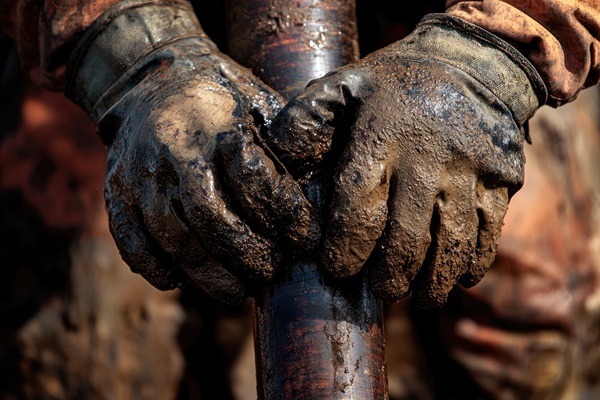
The High Cost of the Texas Energy Corridor
Texas oil never stops pumping, and the pressure to produce often pushes safety to the backseat. From the Eagle Ford Shale right in our backyard to the non-stop pumping of the Permian Basin, oilfield work is the backbone of the Texas economy—but it's also a leading cause of catastrophic injury.
According to the Centers for Disease Control and Prevention (CDC), the extraction industry remains incredibly hazardous, with Texas overwhelmingly leading the nation in severe injuries. Between 2015 and 2022, Texas accounted for 54% of the country's severe oilfield accidents—over 1,100 life-altering incidents.
In 2026, as production in the Permian Basin continues to break records, the risks for contract workers and drillers have only intensified. Most of these injuries involve heavy machinery and contact with equipment, often leaving workers with permanent damage to their upper extremities or internal organs. At The Herrera Law Firm, our Texas oilfield accident lawyers know that when production pressure overrides safety, it's the workers who pay the price.
Contract workers in well-servicing and drilling roles disproportionately bore the brunt of these hazards, accounting for 70.1 percent and 23.4 percent of the severe injuries, respectively. Across the industry, the data reveals that these severe incidents most frequently involved the upper extremities (42.6 percent) and were predominantly caused by contact with objects, equipment, and machinery.
The Leading Causes of Death in the Oilfield
Understanding the cause of an injury is the first step in holding a company accountable. Whether it's a mechanical failure or a supervisor's negligence, most oilfield accidents fall into a few high-risk categories:
- Transportation and Vehicle Crashes: These are the leading cause of death in the sector. Whether it's a tired driver on a lease road or a poorly maintained truck, vehicle accidents are rarely just "bad luck."
- Explosions and Blowouts: Pressure valve failures and flammable gas ignition cause catastrophic blast injuries and fatal burns that no worker can anticipate.
- Struck-By and Caught-Between Incidents: Active rigs are tight spaces filled with swinging pipes and unsecured loads. When a cable snaps or a load shifts, the results are often fatal.
- Toxic Exposure and Falls: From H2S gas that kills in minutes to falls from derricks without proper safety harnesses, these hazards are entirely preventable with the right equipment and training.
The Permian Basin's boom conditions have drawn workers from across the country, often outpacing safety training, adequate supervision, and equipment maintenance cycles. When production pressure overrides safety protocols, the results are predictable.
Navigating the Texas "Non-Subscriber" System
Texas is the only state that doesn't require employers to carry workers' compensation insurance. Companies that opt out are called non-subscribers, and this status completely changes how you must pursue a claim. If you're injured on the job, your path to recovery depends on your employer's coverage:
- If they have Workers' Comp**: You're limited to medical coverage and partial wage replacement. You generally can't sue your employer for pain and suffering, but you can still pursue a third-party claim if another contractor's negligence contributed to the wreck.
- If they are a Non-Subscriber: You can sue your employer directly in civil court. In these cases, the law is on your side—non-subscribers can't argue that you "knew the job was dangerous" to avoid paying you.
- Third-Party Claims: Regardless of insurance, if a defective tool, a separate trucking company, or a different contractor caused the accident, you can sue them for full damages. This includes total loss of future earning capacity, emotional distress, and long-term rehabilitation costs that standard workers' comp won't touch.
**Please note: The Herrera Law Firm does not accept workers' compensation cases but does handle third-party claims related to oilfield accidents, injuries, and deaths.
Immediate Steps to Protect Your Claim
Evidence at an oilfield site disappears fast. Equipment is repaired, production resumes, and the danger zone is cleaned up within hours. To protect your rights, you've got to act quickly:
- Get Medical Attention Immediately: Be honest with the doctor. If you don't mention the injury happened on-site, the insurance company will use that against you later.
- Report the Injury within 30 Days: Even if you think you're okay, missing this deadline can kill your eligibility for benefits.
- Document the Scene: If you're able, take photos of the equipment, the lack of safety gear, or the road conditions before the company "fixes" the problem.
- Don't Sign Anything: Your employer's insurance adjuster isn't your friend. Don't sign statements or settlements until a lawyer has reviewed them.
We Fight for the Workers Who Keep Texas Running
The Texas oilfield accident lawyers at The Herrera Law Firm have spent over 35 years standing up for the men and women in the Eagle Ford Shale, Permian Basin, and beyond.
We don't just settle cases. We investigate the work site, subpoena maintenance records, and identify every responsible party to make sure you're fully compensated for what you deserve.
We also work on a contingency fee basis, so you don't pay us a dime unless we win. If your safety was ignored for the sake of a faster pump, you've earned the right to fight back. Contact us today for a free, confidential consultation.
