
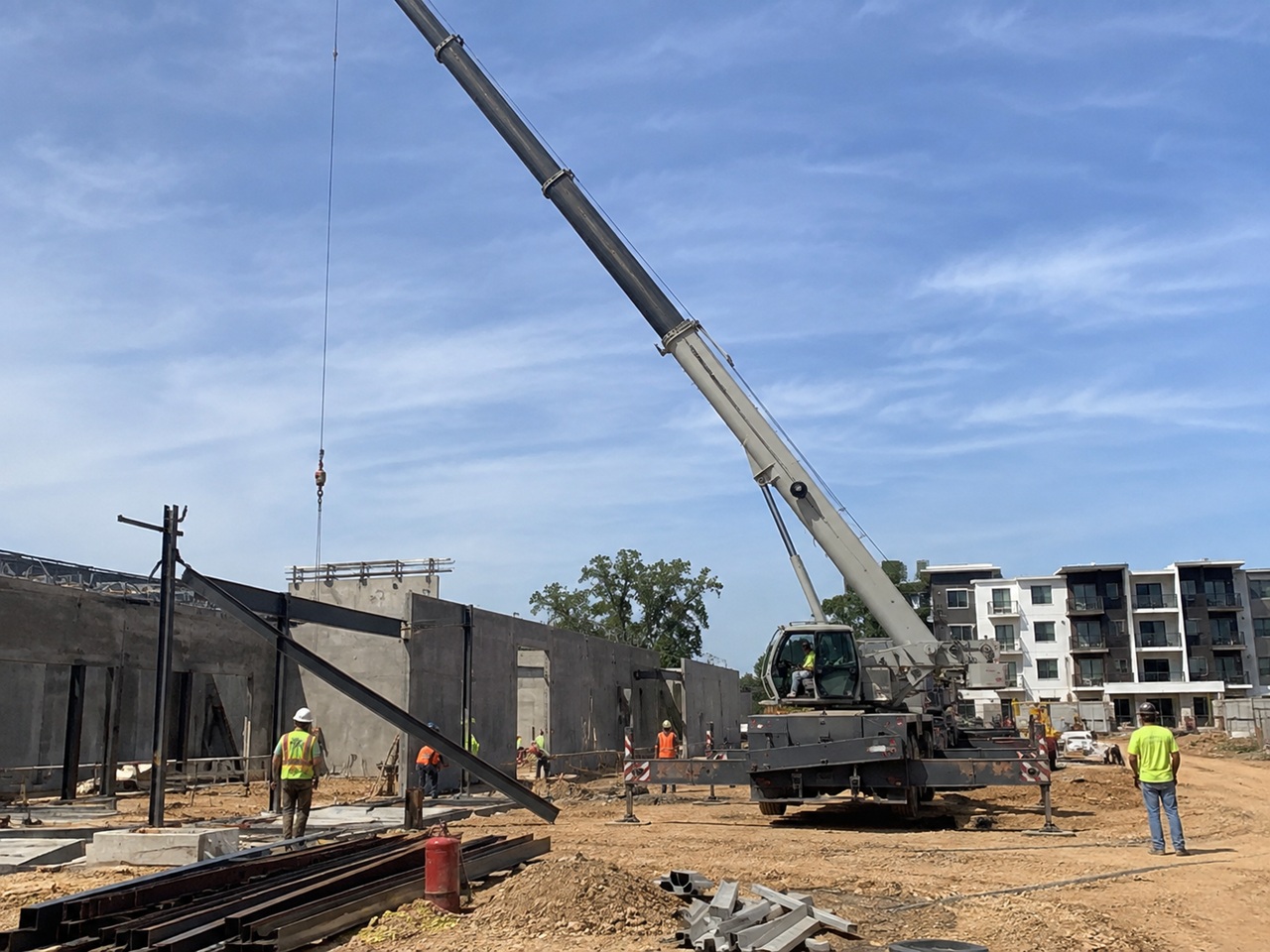
Crane Accidents Often Involve More Than One Responsible Company
A construction accident involving a crane can happen in seconds. A load can swing into workers, rigging can fail, a crane can tip on unstable ground, or equipment can collapse during a lift. Workers standing nearby may have little or no time to react, and the resulting injuries can be catastrophic.
Determining who is legally responsible can be much harder than identifying what went wrong. The crane operator may work for one subcontractor, the crane may belong to another company, and a general contractor may be coordinating work across the entire site. A manufacturer, maintenance contractor, rigging company, or property owner may also enter the picture.
Our San Antonio construction accident lawyers at The Herrera Law Firm investigate those relationships rather than stopping with the person operating the crane. Identifying every company whose own conduct contributed to the accident can become one of the most important parts of a serious Texas work injury claim.
Crane Accident Liability Rarely Stops With The Operator
A crane operator who makes an unsafe movement may have caused the immediate accident, but the investigation shouldn't end there.
Why was an unsafe lift allowed to proceed? Was the operator properly trained and qualified? Was the ground capable of supporting the equipment? Did someone overload the crane? Was a signal person required? Had the crane missed an inspection? Did a contractor know about a dangerous condition but fail to correct it?
Construction sites frequently involve several employers working simultaneously. Texas law allows an injured worker receiving workers' compensation benefits to pursue damages from a legally responsible third party, meaning someone other than an employer protected by the workers' compensation system. That makes identifying the actual business relationships on the job site critical.
A third-party work injury claim may provide a path to compensation when another contractor, equipment company, manufacturer, or other outside party contributed to the accident.
Several Companies May Need To Be Investigated
No single list applies to every crane accident. The potential defendants depend on who controlled the equipment, who controlled the work that caused the injury, and what actually failed.
| Potentially Responsible Party | What Investigators May Look For |
|---|---|
| Crane Operator's Employer | Operator training, certification, supervision, lift procedures, scheduling, and whether unsafe operation contributed to the accident. |
| General Contractor or Controlling Entity | Site coordination, ground preparation, known site hazards, safety responsibilities, and the extent of control over the work that caused the injury. |
| Crane Owner or Rental Company | Inspection history, known defects, maintenance responsibilities, repair records, and the condition of the equipment when it was supplied. |
| Maintenance or Inspection Contractor | Missed defects, inadequate repairs, incomplete inspections, or failure to address a known mechanical problem. |
| Rigging or Signal Contractor | Improper rigging, unsafe load handling, communication failures, or use of an unqualified signal person. |
| Equipment Manufacturer | A defect in the crane, rigging equipment, safety system, or component that contributed to the failure. |
The fact that a company appears in this table doesn't automatically make it liable. The evidence still has to connect that company's own conduct or legal responsibility to the accident.
Your Employer's Workers' Compensation Status Changes The Case
Texas handles workplace injuries differently from most states because most private employers can choose whether to participate in the state workers' compensation system.
If your direct employer carries Texas workers' compensation coverage and you're covered by it, Texas Labor Code § 408.001 generally makes workers' compensation the exclusive remedy against that employer for a work-related injury. That usually prevents an ordinary negligence lawsuit against the employer itself, although Texas law contains a separate exception involving exemplary damages after certain fatal workplace injuries.
But workers' compensation doesn't necessarily block claims against negligent third parties. Texas Labor Code § 417.001 expressly allows an injured employee to pursue a third-party claim while also pursuing workers' compensation benefits.
If the employer is a Texas workers' compensation non-subscriber, the analysis changes considerably. An injured employee may be able to sue that employer directly for negligence. Texas law also strips non-subscribing employers of several defenses they would ordinarily use, including contributory negligence, assumption of the risk, and negligence by a fellow employee.
The Herrera Law Firm does not handle workers' compensation claims. However, we do represent injured workers in non-subscriber cases and third-party workplace injury claims.
The General Contractor Is Not Automatically A Third Party
This is one of the less obvious rules in Texas construction accident cases.
A worker may assume that because the general contractor is a different company from their direct employer, the general contractor can always be sued as a third party. That isn't necessarily true.
Under Texas Labor Code § 406.123, a general contractor and a subcontractor may enter into a written agreement in which the general contractor provides workers' compensation coverage to the subcontractor and its employees. For workers' compensation purposes, that arrangement can also make the general contractor an employer.
If that protection applies, an ordinary negligence claim against the general contractor may be barred by the workers' compensation exclusive-remedy rule.
That makes the contracts and insurance documents on the project important evidence. Before labeling another construction company a third party, an attorney may need to determine who provided the workers' compensation coverage and whether any written contractor agreements changed the legal relationships on the site.
OSHA's Crane Rules Can Help Show What Should Have Happened
OSHA Subpart CC contains detailed federal safety requirements for cranes and derricks used in construction.
Among other things, the rules address operator qualifications, ground conditions, equipment inspections, signals, work-area control, power lines, assembly and disassembly, and keeping workers clear of suspended loads.
Several requirements can become particularly important after an accident:
- Operator Qualifications: Employers generally must ensure covered crane operators are trained, certified or licensed, and evaluated before operating the equipment.
- Ground Conditions: Cranes generally can't be assembled or used unless the ground is sufficiently firm, drained, and graded to support the equipment in accordance with manufacturer requirements.
- Controlling Entity Responsibilities: OSHA assigns specific ground-preparation responsibilities to the project's controlling entity and requires disclosure of certain known underground hazards.
- Signal Persons: A signal person is required in situations including when the operator cannot fully see the point where the load is being placed or when the operator's view is obstructed while the equipment is traveling.
- Qualified Signal Persons: Someone serving as the signal person must satisfy OSHA's qualification requirements before giving signals.
An OSHA violation doesn't automatically make a company civilly liable for a worker's injuries. The Occupational Safety and Health Act itself does not create a private workplace-injury lawsuit. But OSHA requirements can still be relevant when determining which safety procedures were applied and whether a company's conduct fell below the appropriate standard of care.
Ground Failure Can Point Toward A Different Defendant
Crane accidents aren't always caused by someone behind the controls.
A crane depends on the surface underneath it. Voids, poorly compacted fill, slopes, buried utilities, inadequate cribbing, or improperly positioned outriggers can make an otherwise routine lift unstable.
OSHA places the responsibility on the controlling entity to provide necessary ground preparation and to communicate certain known underground hazards to the crane user and operator.
That means a tip-over investigation may need to examine soil information, site drawings, utility information, setup photographs, outrigger placement, mats or cribbing, and communications between the crane company and the party controlling the project.
The person operating the crane may have done exactly what they were told and still have been placed on a surface that couldn't safely support the load.
Equipment Failure May Create A Product Or Maintenance Claim
A snapped component, failed brake, damaged wire rope, defective safety device, or structural failure can shift the focus away from lift operation and toward the equipment itself.
Maintenance records can show whether a known problem was ignored or whether an outside company performed an inadequate inspection or repair. When a defect originated in the equipment's design or manufacture, a product liability claim against the manufacturer may also need to be considered.
Crane collapses and equipment failures are serious construction-site hazards, and a mechanical failure should prompt questions about who owned, inspected, maintained, repaired, modified, and manufactured the failed component, rather than assuming the operator made a mistake.
Evidence From The Lift Can Disappear Quickly
A crane accident can generate evidence held by several different companies. That makes early preservation especially important.
Depending on the accident, an investigation may need:
- Operator Certification and Evaluation Records: These can show whether the operator met applicable qualification requirements.
- Daily and Periodic Inspection Records: These may reveal defects or recurring problems involving the crane.
- Maintenance and Repair Records: These can show when a mechanical problem was reported and what was done about it.
- Lift Plans and Load Information: These may help determine whether the crane was operated within capacity and in accordance with the planned configuration.
- Site Photographs and Video: Images can preserve ground conditions, outrigger placement, rigging, load position, and worker locations before the site changes.
- Contracts and Insurance Records: These can help identify which company had particular responsibilities and whether workers' compensation agreements affect who can be sued.
- Witness Statements: Crane operators, riggers, signal persons, supervisors, and workers nearby may each have a different view of what happened.
A damaged crane may be repaired or moved, the construction site may change within days, and employees from different subcontractors may leave the project. Waiting can make a complicated liability investigation even harder.
Texas Can Divide Responsibility Among Several Parties
A crane accident case doesn't always end with one company being assigned 100 percent of the blame.
Under Texas Civil Practice and Remedies Code Chapter 33, responsibility can be divided among multiple parties. A claimant generally cannot recover damages when their own percentage of responsibility is greater than 50 percent.
That rule creates a predictable defense strategy in serious construction cases: companies may try to blame one another, and some may also argue that the injured worker failed to follow instructions or should have recognized the danger.
The evidence needs to answer those accusations. Training records, lift plans, safety meetings, photographs, witness accounts, equipment data, and company policies can help establish who actually controlled the dangerous condition and who had the ability to prevent the accident.
Crane Injuries Can Create Losses Far Beyond The Initial Hospital Bill
Crane accidents can cause traumatic brain injuries, spinal cord damage, crush injuries, amputations, burns, fractures, and other injuries that permanently change someone's ability to work.
Depending on the type of claim and the parties responsible, recoverable damages may include:
- Medical Expenses: Emergency care, surgery, hospitalization, rehabilitation, medication, equipment, and future treatment.
- Lost Income: Wages and other earnings lost during recovery.
- Loss of Earning Capacity: The reduction in future earning ability caused by permanent limitations.
- Pain and Suffering: Physical pain and the personal impact of living with a serious injury.
- Physical Impairment: Compensation for limitations that interfere with normal activities and independence.
- Wrongful Death Damages: Additional claims may be available to eligible family members when a crane accident results in a fatality.
Which damages are available depends in part on whether the case involves workers' compensation, a non-subscriber employer, or a negligent third party.
Winning Isn't Luck. It's Knowing How To Fight.
A crane accident can put several corporations, insurance carriers, and defense lawyers between an injured worker and the truth about what happened. Our San Antonio construction accident attorneys investigate the operator, contractors, insurance arrangements, equipment history, OSHA requirements, and physical evidence before deciding who belongs in the case.
Our case results include a $2.25 million construction accident settlement, a $1.95 million construction accident settlement, as well as other significant work-injury recoveries.
If you were seriously injured in a crane accident in San Antonio or elsewhere in Texas, contact us for a free case evaluation. We handle qualifying cases on a contingency fee basis, so you won't owe attorney's fees unless we recover compensation for you.
