
San Antonio Motorcycle Accident Lawyers Explain Why Drivers Need To Look Twice
A driver who misses a motorcycle in traffic may only realize the mistake after it is too late. In San Antonio, motorcycle accidents can happen anywhere cars, trucks, and motorcycles move through the same tight spaces, including I-35, Loop 410, I-10, Bandera Road, and Military Drive.
Motorcycles are harder to see than larger vehicles, but that does not excuse drivers who fail to look carefully. Texas officials continue urging drivers to “Share the Road” and look twice for motorcycles, especially at intersections where many serious crashes happen. According to the Texas Department of Transportation (TxDOT), two motorcyclists die in crashes on Texas roads every day on average. In one recent year alone, 557 riders lost their lives, and another 2,468 suffered serious injuries in motorcycle crashes statewide.
Those numbers should get every driver’s attention. Motorcycle safety is not only a rider issue. It is also a driver awareness issue. When drivers turn left without checking carefully, follow too closely, drift across lanes, or drive distracted, the motorcyclist usually suffers the worst injuries. That is why we take motorcycle safety so seriously at The Herrera Law Firm.
Why Are Motorcycles So Easy For Drivers To Miss?
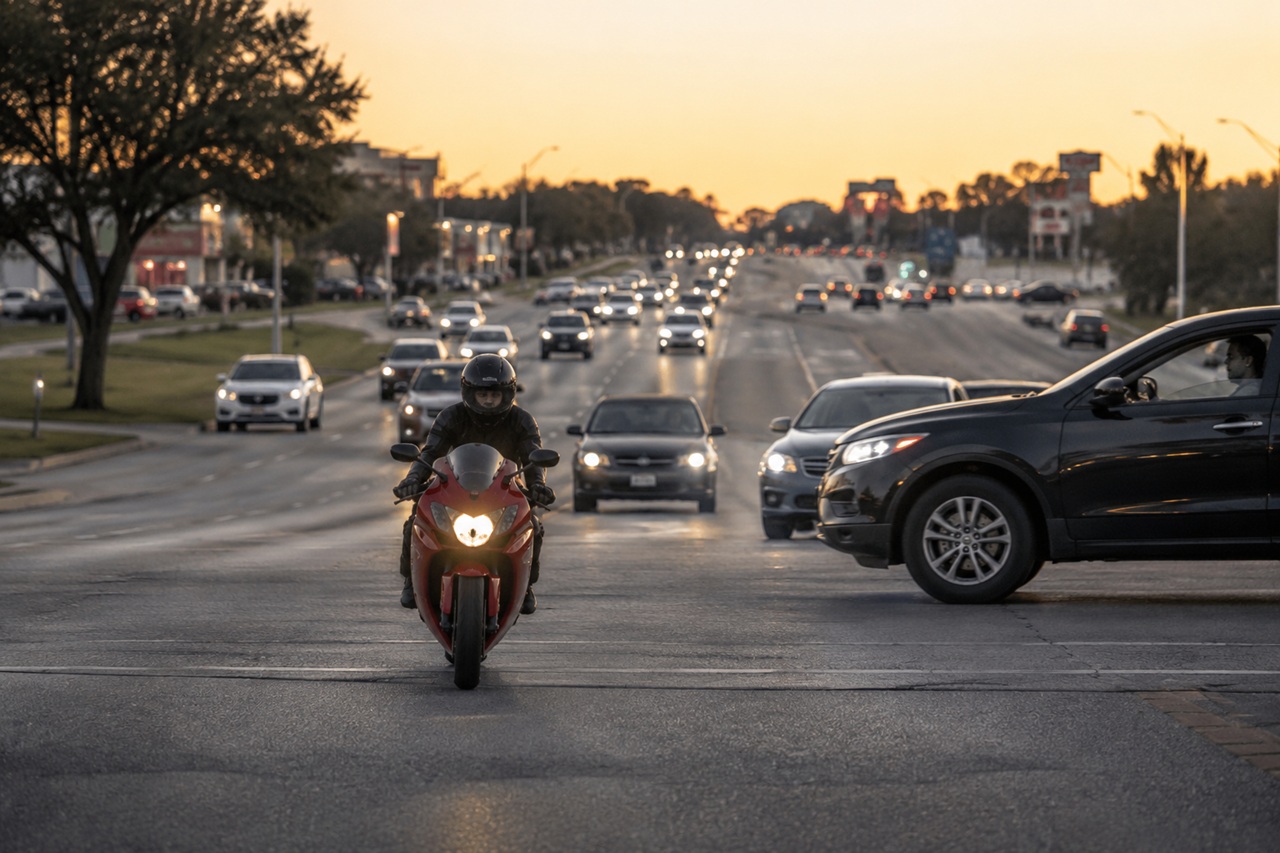
A motorcycle does not take up the same visual space as a car or truck. That smaller profile can make a rider appear farther away than they actually are. A driver waiting to turn left may believe there is enough time to cross traffic, then pull directly into the rider’s path.
That mistake can happen quickly in San Antonio traffic. A driver may glance once at an intersection near Broadway, Culebra Road, or Wurzbach Parkway and assume the lane is clear. But a motorcycle can close that distance much faster than drivers expect, especially in normal city traffic conditions.
Drivers need to actively look for motorcycles, not just other passenger vehicles. Mirrors, blind spots, intersections, and oncoming lanes all require careful attention. A second look can be the difference between a safe turn and a crash that leaves a rider seriously injured.
Where Do San Antonio Motorcycle Crashes Often Happen?
Heavy traffic creates more opportunities for dangerous mistakes. Roads like Loop 410, I-35, and I-10 combine fast-moving traffic, merging vehicles, sudden slowdowns, and crowded lanes. Motorcyclists often have little room to react when another driver drifts across traffic or brakes unexpectedly.
Motorcycle crashes also happen frequently near Military Drive, Bandera Road, Wurzbach Parkway, Converse, Leon Valley, and throughout the South Side, where suburban traffic and busy intersections create additional risks for riders.
These roads are not dangerous simply because motorcycles use them. They become dangerous when drivers fail to account for riders sharing the roadway. A motorcyclist can follow traffic laws, wear protective gear, and stay alert, yet still suffer catastrophic injuries because of one careless decision by another driver.
What Should Drivers Do At Intersections?
Intersections remain one of the most dangerous places for motorcyclists because drivers often misjudge a motorcycle’s speed or distance. A left-turn collision may happen when a driver sees the motorcycle approaching but incorrectly assumes there is enough time to turn safely.
Drivers should wait for motorcycles to fully clear the intersection before turning left. Saving a few seconds in traffic is never worth risking a catastrophic crash. One careless turn can leave a rider facing broken bones, traumatic brain injuries, spinal injuries, or worse.
Drivers should also stay alert when turning right, pulling out of parking lots, or crossing multiple lanes of traffic. Motorcycles can become hidden beside larger vehicles, roadway glare, shadows, or roadside obstructions. Looking once is often not enough when a rider’s safety depends on whether the driver notices them in time.
Why Does Following Too Closely Put Riders In Danger?
A tailgating driver gives a motorcyclist very little room to react. Motorcycles can slow down quickly, especially when riders downshift instead of braking heavily. A driver following too closely may not have enough time to stop before causing a rear-end collision.
What may seem like a relatively minor crash for someone inside a passenger vehicle can become devastating for a rider. A rear-end collision can throw a motorcyclist onto the pavement, into another lane, or directly into surrounding traffic.
Drivers should leave extra following distance behind motorcycles and give riders room to react to traffic, debris, potholes, sudden stops, and changing road conditions. Crowding a rider only increases the danger for everyone nearby.
What Does It Mean To Give A Motorcycle The Full Lane?
A motorcycle has the same right to occupy a full lane as any other vehicle. Drivers should never attempt to squeeze beside a motorcycle in the same lane or edge around riders in heavy traffic. That type of driving can force a rider toward uneven pavement, nearby vehicles, or roadway hazards.
Lane positioning also matters for visibility and safety. Riders may shift within their lane to improve visibility, avoid debris, or create safer spacing around surrounding vehicles. Drivers who crowd motorcycles remove those options.
When passing a motorcycle, drivers should change lanes completely and leave enough space between vehicles. Anything less can quickly become dangerous.
How Do Distracted Drivers Cause Motorcycle Accidents?
A driver who looks down at a phone for even a few seconds can completely miss a nearby motorcycle. That danger becomes even greater in stop-and-go traffic, near downtown exits, or on roads where vehicles merge quickly.
Distracted driving involves far more than texting. Drivers also create serious risks when they adjust GPS systems, scroll through music, eat, reach for objects, or focus on conversations instead of traffic.
Motorcyclists already have to constantly monitor road hazards, lane changes, traffic signals, and turning vehicles. They should not also have to worry whether nearby drivers are paying attention at all.
Why Do Injured Riders Often Face Blame After A Crash?
The collision itself is often only the beginning of the fight. Afterward, drivers may claim the motorcycle “came out of nowhere” or accuse the rider of speeding. Insurance companies frequently repeat those arguments because shifting blame onto the rider can reduce what they pay.
That matters in Texas because the state uses a modified comparative fault system. If the insurance company successfully argues the rider shares responsibility for the crash, compensation may be reduced or even denied altogether, depending on the percentage of fault assigned.
Evidence often becomes critical in these cases. Photos, witness statements, police reports, traffic camera footage, crash scene evidence, and vehicle damage can help establish whether the driver failed to yield, changed lanes unsafely, or followed too closely. The sooner evidence gets preserved, the harder it becomes for insurers to reshape the story later.
Why Should I Hire A San Antonio Motorcycle Accident Lawyer?
A serious motorcycle crash can leave you dealing with pain, medical treatment, missed work, and insurance company pressure before you even understand the long-term impact of your injuries. You should not have to manage that process alone while recovering.
A San Antonio motorcycle accident lawyer can investigate the crash, preserve evidence, deal directly with the insurance company, and push back when the other side tries to blame you unfairly. A lawyer can also evaluate the full financial impact of the crash, including medical costs, lost income, motorcycle damage, pain, and future treatment needs.
At The Herrera Law Firm, our San Antonio motorcycle accident attorneys have represented injured riders for more than 35 years. We understand how devastating these crashes can become and how quickly insurance companies may turn against riders after a collision. If you were hurt in a motorcycle wreck in San Antonio or anywhere in Bexar County, contact us today for a free consultation.
